

How to Power a City
How to Power A City Documentary and Q/A with director Melanie LaRosa. Co-presented by Storm Surge and the City of Newburyport Energy Advisory Committee. Supported in part by the Newburyport Cultural Council.
A free community screening of the award-winning climate documentary How to Power a City took place on April 27, 2026 at The Screening Room in Newburyport.
Co-presented by Storm Surge and the City of Newburyport Energy Advisory Committee, the event brought residents together to explore practical solutions to climate change through renewable energy. The 72-minute film highlights real-world projects across six U.S. locations, showcasing how communities are adopting solar and wind power despite political and economic challenges. Following the screening, director Melanie La Rosa joined attendees for a live Q&A, offering insight into the film’s creation and the broader movement for climate action.
Praised for its solutions-focused approach, the documentary has received multiple “best of fest” nominations, including honors for Best Feature Documentary and Best Director. La Rosa’s work emphasizes how individuals and communities can contribute to addressing climate change, a message that resonated strongly in coastal Newburyport, where climate impacts are increasingly tangible.
Supported in part by the Newburyport Cultural Council, the event aimed to inspire local engagement and spark meaningful conversations about renewable energy and community-driven climate solutions
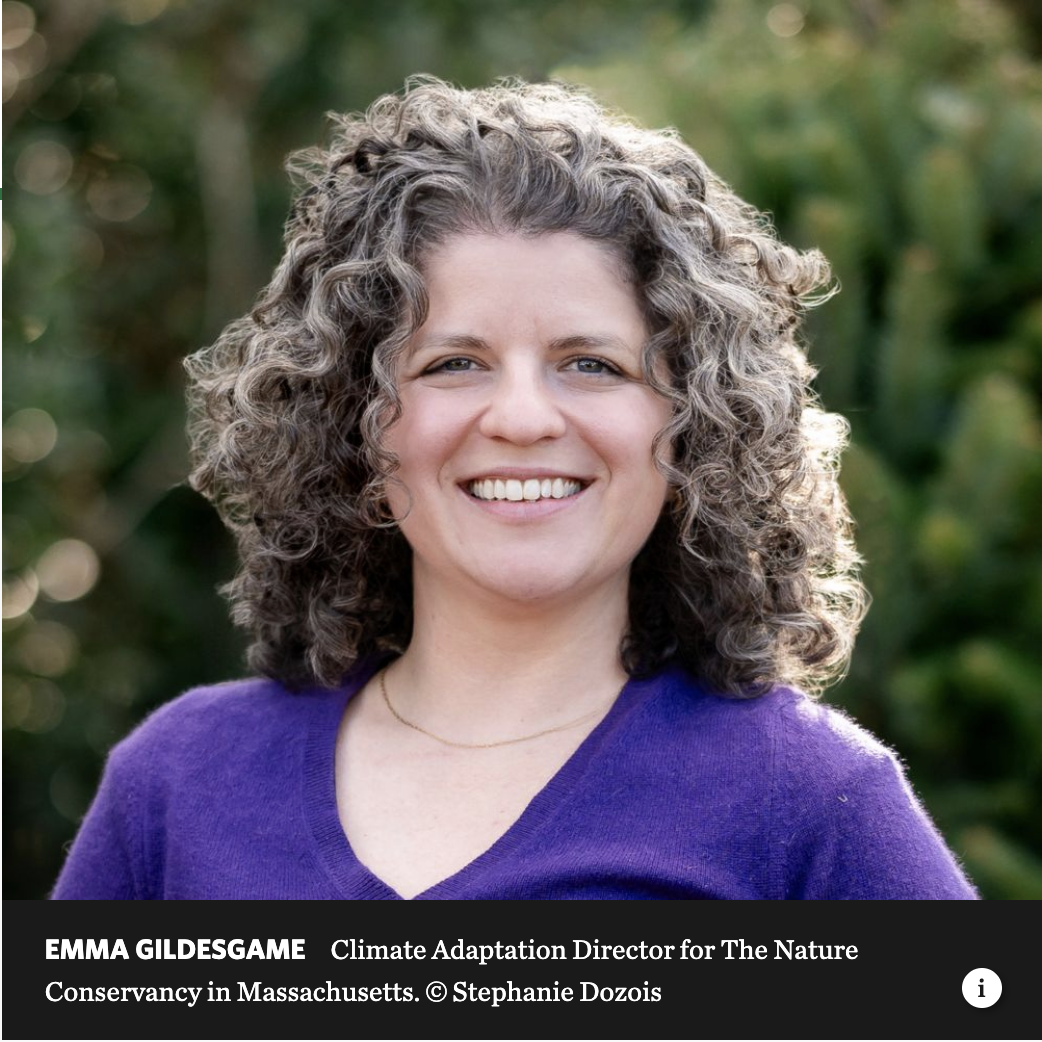
Making Space for Water: Reimagining Our Relationship to the Coast
Emma Gildesgame, Climate Adaptation Director at The Nature Conservancy in Massachusetts, explored how coastal communities can proactively plan for rising sea levels and intensifying storms, shifting the focus from whether to adapt to how.
In this talk, Emma Gildesgame, Climate Adaptation Director at The Nature Conservancy in Massachusetts, explored how coastal communities can proactively plan for rising sea levels and intensifying storms, shifting the focus from whether to adapt to how. She shared insights from her work facilitating community conversations about coastal relocation as one strategy within a broader climate adaptation toolkit, addressing misconceptions and highlighting voluntary, community-centered approaches that enhance safety while allowing coastal ecosystems to adjust. The presentation also covered emerging state efforts, including a developing Massachusetts statewide buyout program, and emphasized the relevance of these issues for Greater Newburyport—from Plum Island to the Merrimack River—offering attendees a deeper understanding of the options communities are considering in response to a changing coastline.
Emma’s slides are available here.

A Community Conversation with Climate Scientist Erika Spanger "What Now?" as World Overshoots Critical 1.5°C Target
Erika Spanger, Director of Strategic Climate Analytics at the Union of Concerned Scientists, lead a community conversation exploring the global implications of surpassing the 1.5°C warming threshold established under the Paris Agreement.
February 5, 2026
Storm Surge welcomed climate scientist Erika Spanger, Director of Strategic Climate Analytics at the Union of Concerned Scientists, for a community conversation exploring the global implications of surpassing the 1.5°C warming threshold established under the Paris Agreement. Spanger explained how rising global temperatures are driving sea level rise, intensifying extreme weather, and increasing climate risks for coastal communities like Newburyport. Drawing on her extensive research on coastal flooding and extreme heat, she helped audiences understand what this milestone means and why communities must prepare for increasing climate impacts.
The presentation also focused on pathways forward, emphasizing adaptation strategies and the importance of community dialogue in navigating climate uncertainty. Spanger encouraged residents to engage with local resilience planning while acknowledging the complexity of responding to global climate shifts.