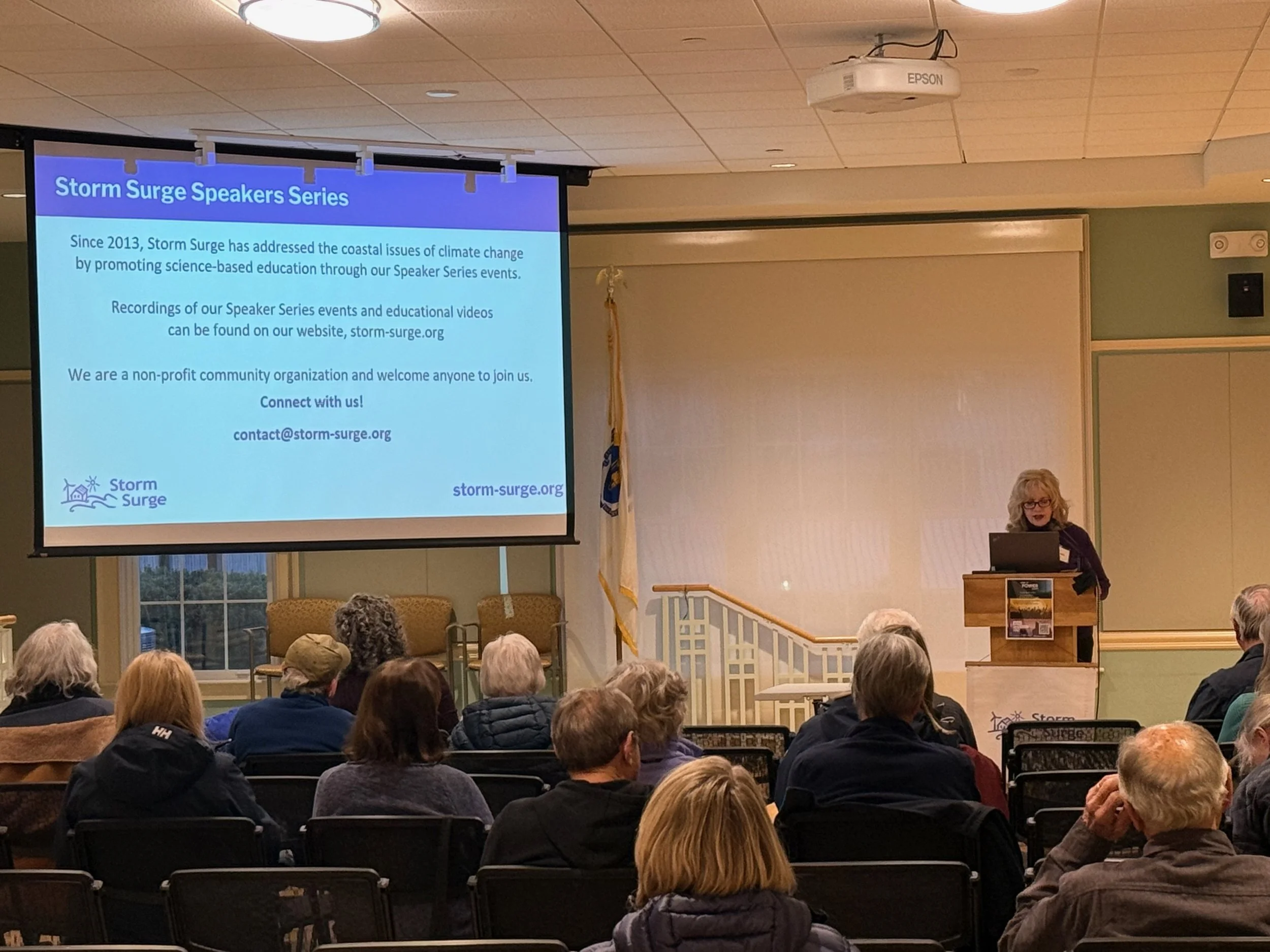
Since its inception in 2013 Storm Surge has presented over 80 public programs related to climate change. This archive contains videos from many of the previous events.
Table of Contents
2020-2022 Speaker Series
2017-2019 Speaker Series
2013-2016 Speaker Series
2025 - 2026 Speaker Series
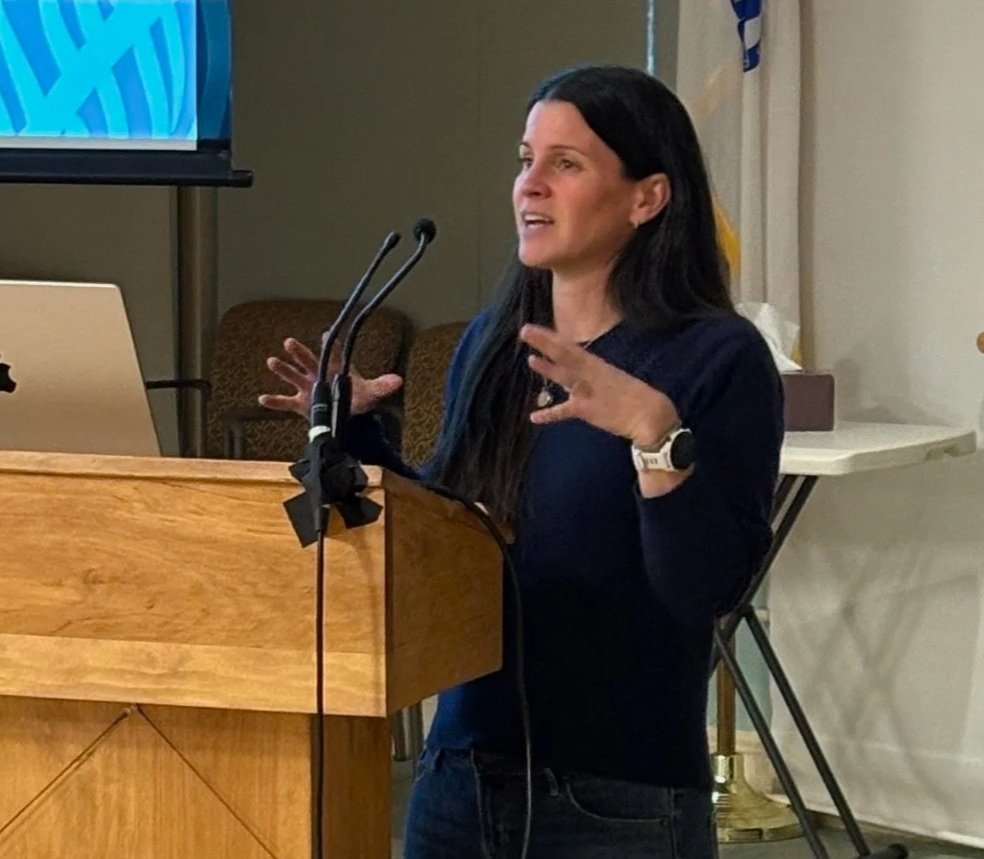
How to Power A City Documentary and Q/A with director Melanie LaRosa. Co-presented by Storm Surge and the City of Newburyport Energy Advisory Committee. Supported in part by the Newburyport Cultural Council.
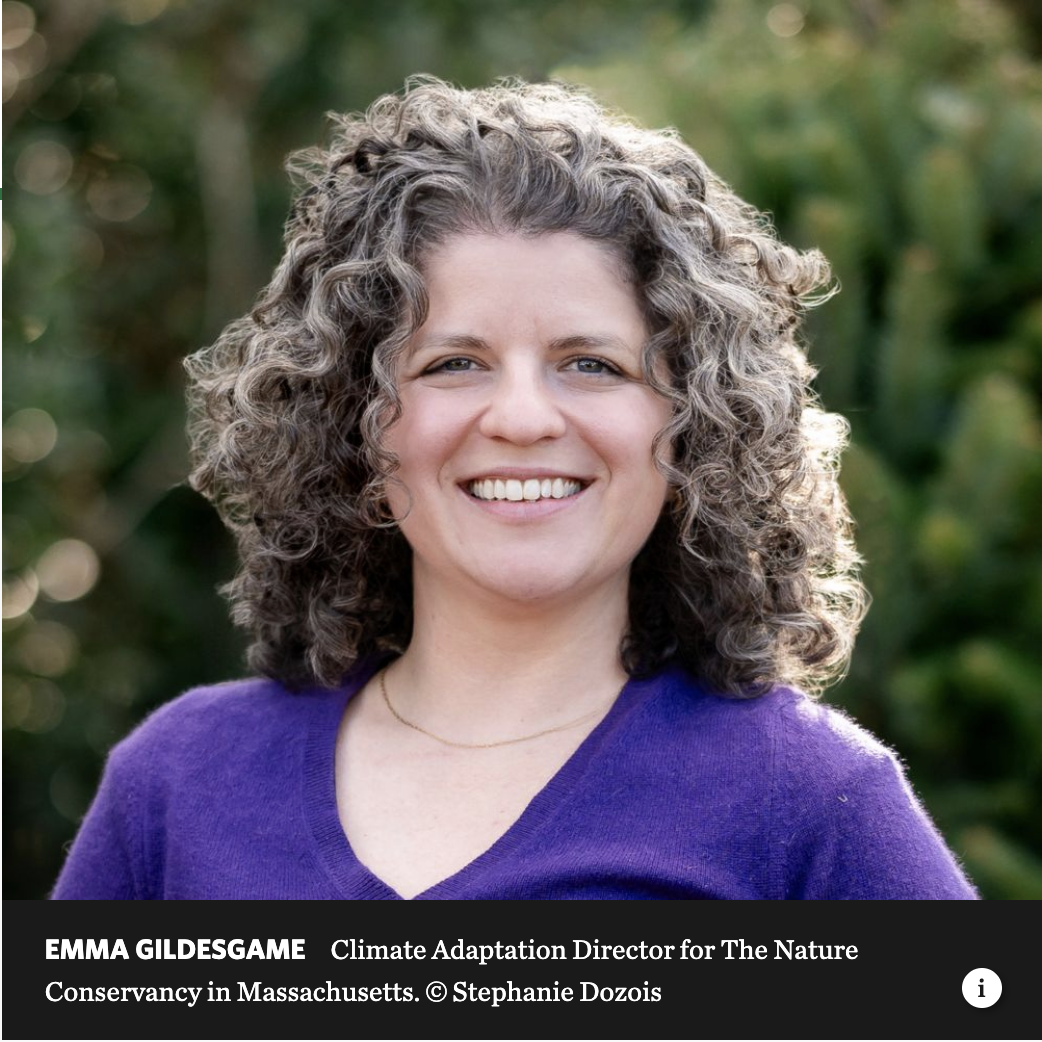
Emma Gildesgame, Climate Adaptation Director at The Nature Conservancy in Massachusetts, explored how coastal communities can proactively plan for rising sea levels and intensifying storms, shifting the focus from whether to adapt to how.
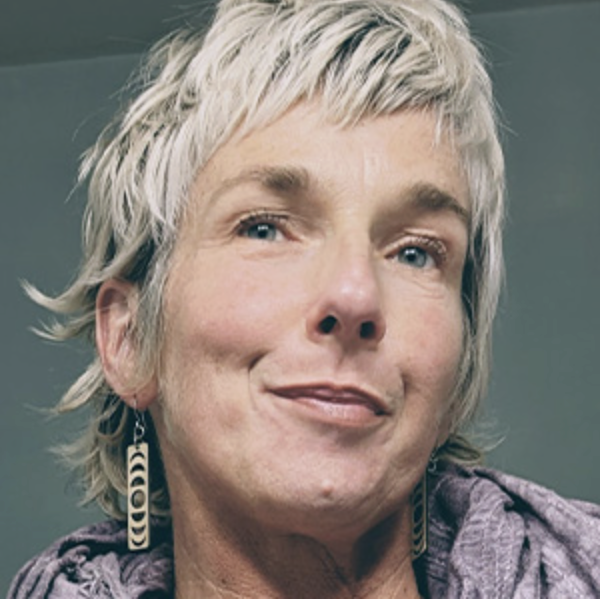
Erika Spanger, Director of Strategic Climate Analytics at the Union of Concerned Scientists, lead a community conversation exploring the global implications of surpassing the 1.5°C warming threshold established under the Paris Agreement.
Curt Rogers and Jose Tapia from the Merrimack River Watershed Council presented a clear, data-driven look at the challenges facing the river—from the scale of combined sewer overflows (CSOs) to the impacts of increasingly intense rainfall driven by climate change. They also shared early findings from MRWC’s real-time monitoring sensor placed in Newburyport, which provides valuable on-the-ground insight into bacterial conditions in the harbor.
The December 2024 closure of Massachusetts' only Shellfish Purification Plant marks a pivotal moment for one of New England's most productive fisheries. For decades, this facility on Plum Island—the nation's oldest and largest depuration plant—has been the lifeline for Merrimack River estuary clams, purifying harvests from waters impacted by upstream development before they reach consumers nationwide.
Charlie Sidoti, Executive Director of InnSure provided an informative presentation on cutting-edge approaches to closing the climate insurance "protection gap” and the growing challenges coastal communities face as traditional insurance markets struggle with increasing climate risks.
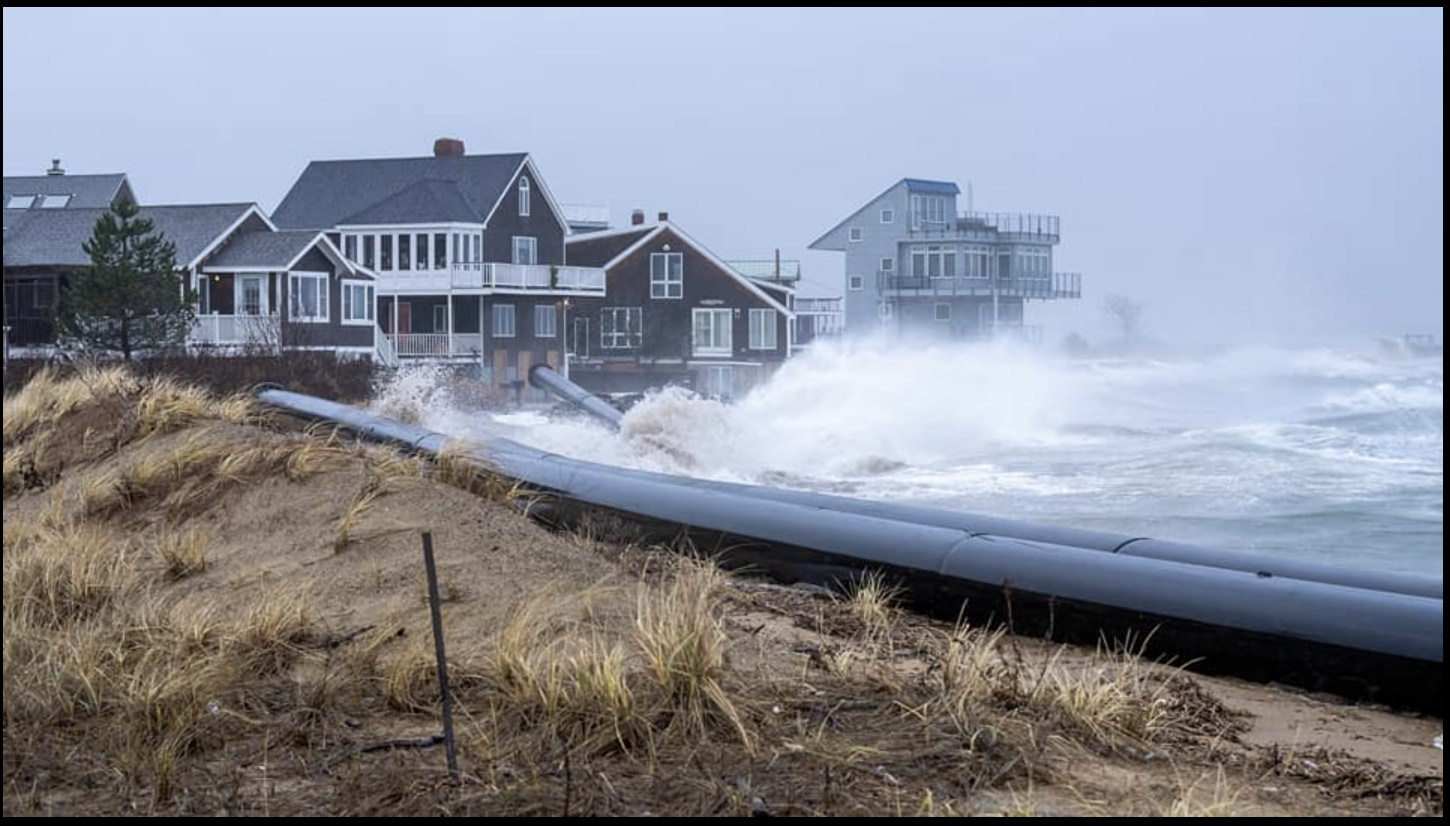
The event features Katie Giannakopoulos, Coastal Dynamics Research Associate at the Gulf of Maine Research Institute, who will examine the complex factors driving coastal flood risks in New England. Her presentation will address both long-term climate change impacts and the immediate threats posed by severe weather events, including an analysis of the devastating January 2024 storms that significantly impacted Gulf of Maine communities.
Phil Colarusso, marine biologist and diver for the Environmental Protection Agency (EPA), returns to provide an update following his February 2020 presentation. Joining Dr Colarusso will be Nedret Andre, an internationally recognized artist based in Boston’s South End, uses abstract painting to raise awareness of seagrass conservation.
Liv Woods and John Cigliano from the Mass Oyster Project joined us at the Newburyport Senior/Community Center on Tuesday, March 4, 2025
Liv presented an overview of the Mass Oyster Project and John spoke to the affects of coastal acidification on the Gulf of Maine and Oyster populations.
2023- 2024 Speaker Series
Shelly McComb and Bryan McCormack of the Woods Hole Oceanographic Institution Sea Grant Program discussed coastal resilience and climate impacts. Bryan explained how future climate change, sediment transport, and coastal erosion may affect properties, while Shelly shared practical resilience strategies, including home improvements, flood insurance, emergency planning, and an overview of FEMA and MEMA flood mitigation grants for projects such as home elevation, resilience upgrades, and voluntary property buyouts.
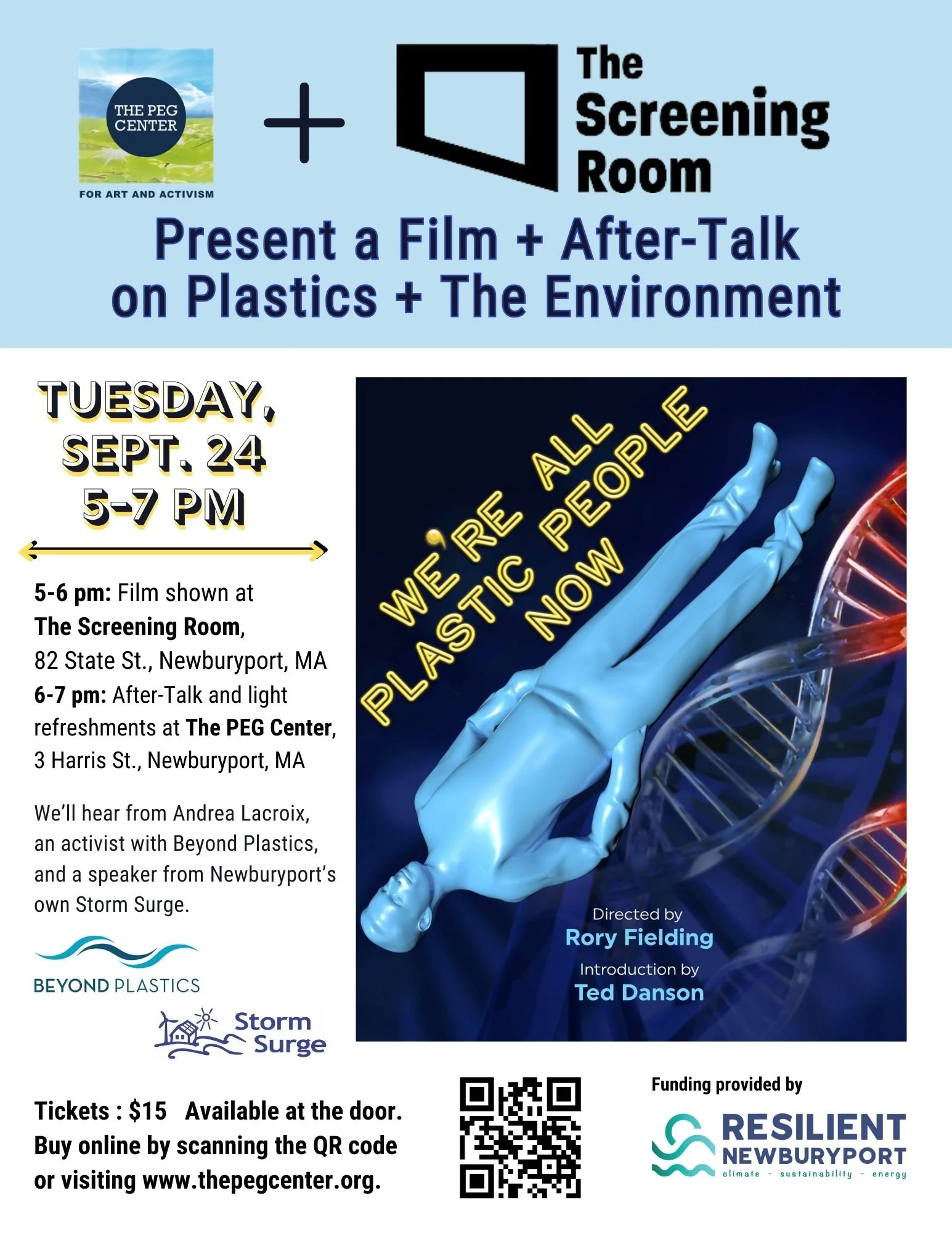
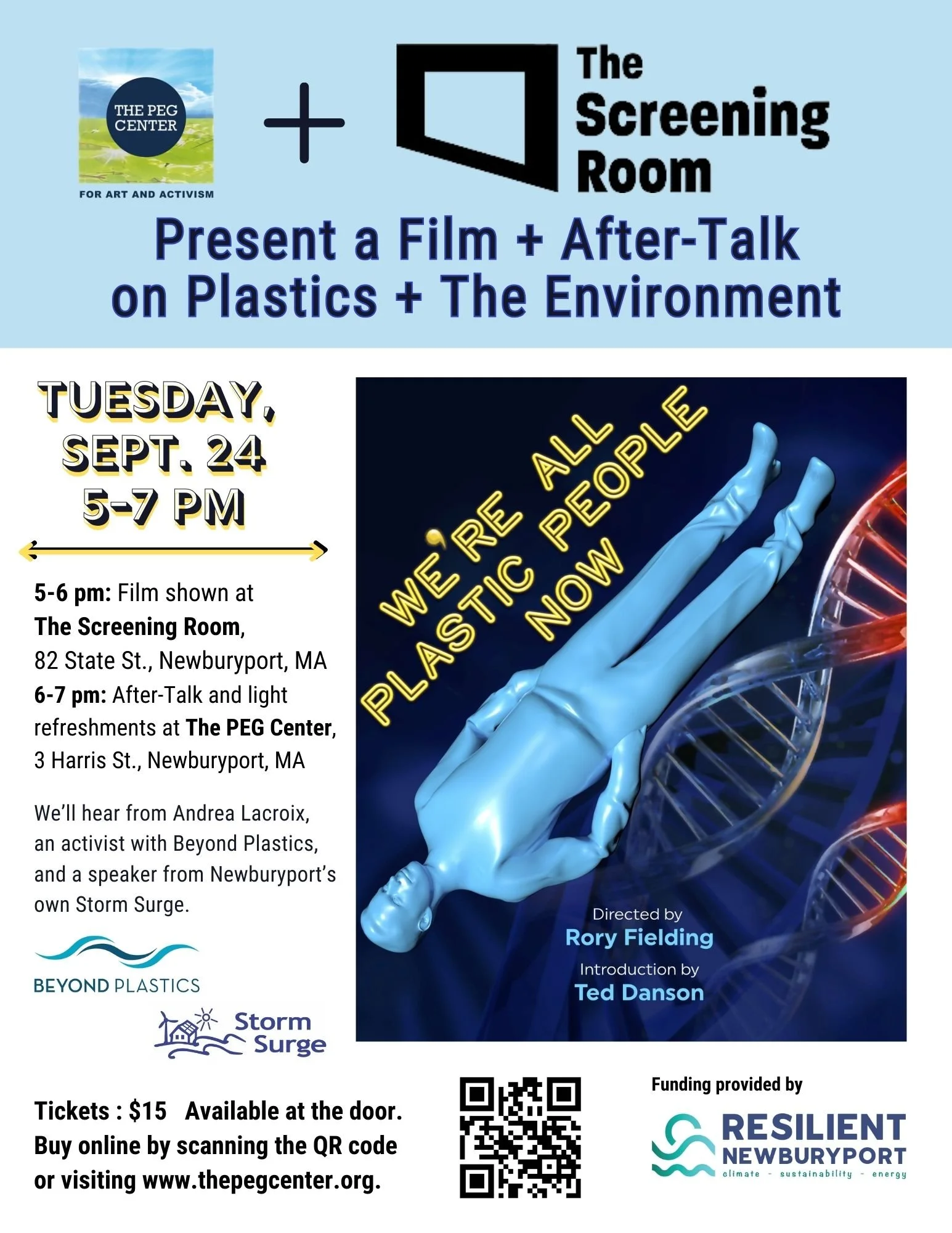
On September 24, we co-sponsored a screening of the Emmy Award-winning documentary We're All Plastic People Now, followed by a discussion with our friends at the PEG Center and The Screening Room.
In the film, director Rory Fielding tests his own blood and that of four generations of his family for plastic-derived chemicals, revealing the widespread presence of microplastics in our bodies and environment. Featuring scientists and activists, the documentary explores how plastics enter the food chain and highlights the urgent need for collective action to reduce plastic pollution.
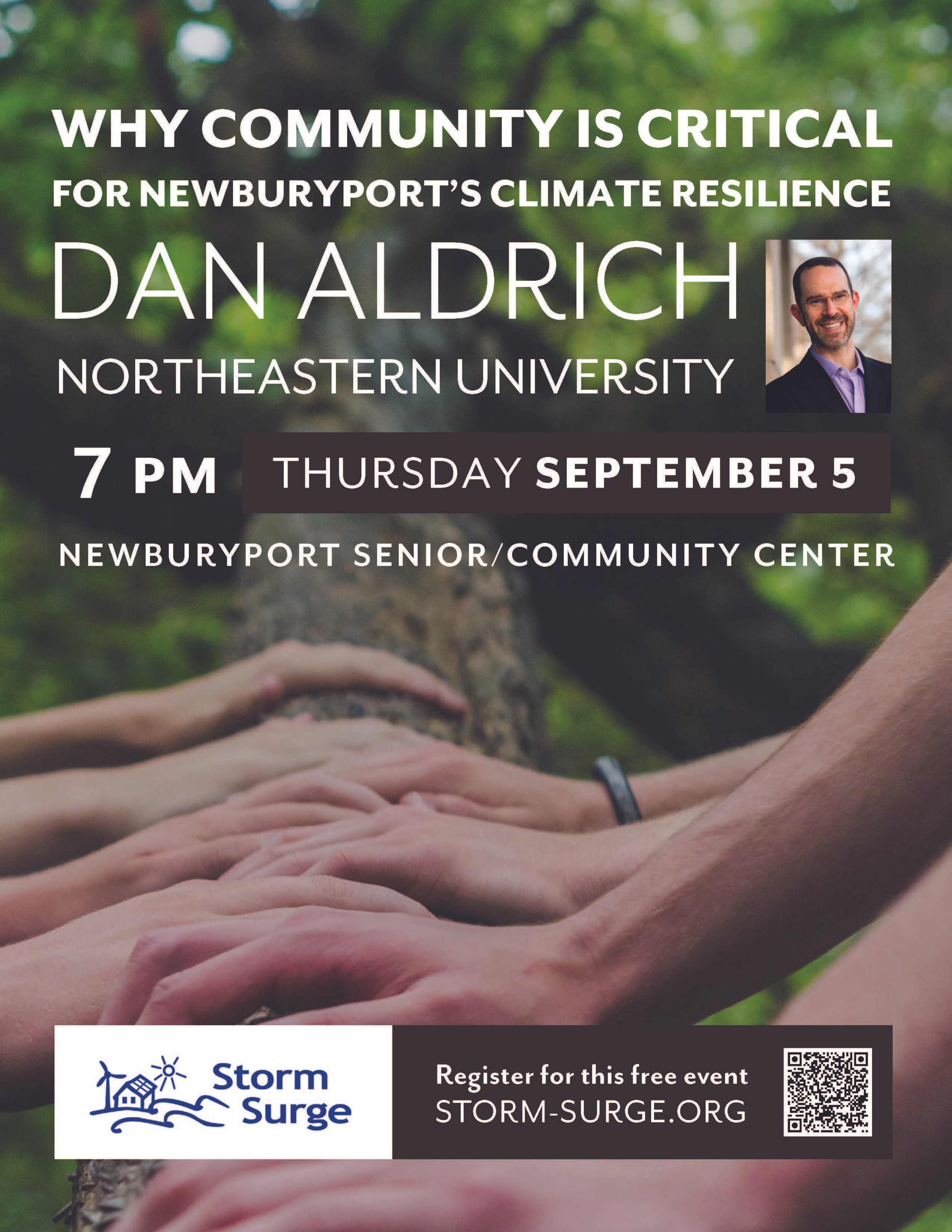
On September 5, we welcomed award-winning author and Northeastern University professor Daniel Aldrich for a talk on building community resilience through social infrastructure. Drawing on his research, Dr. Aldrich showed how libraries, parks, and other shared spaces can strengthen communities and help reduce the impacts of climate-related disasters, offering valuable insights for building a more resilient Newburyport.
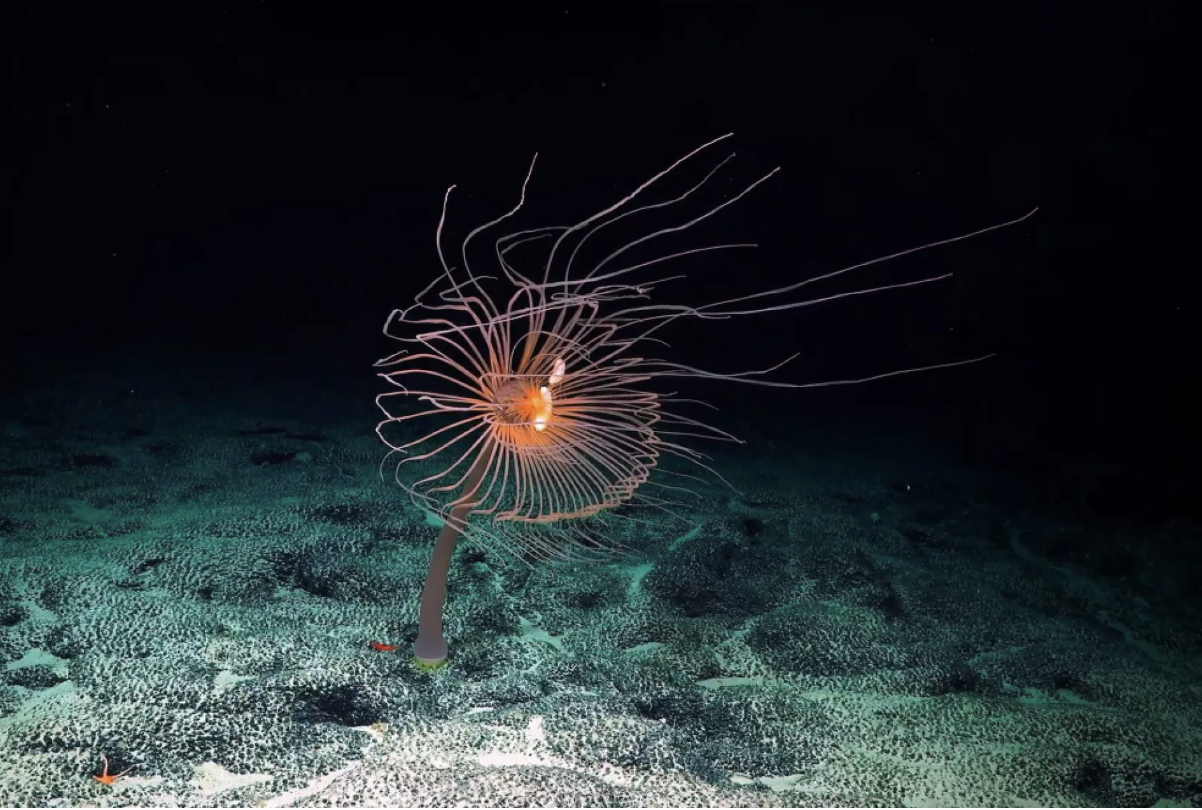
On December 7, 2023, we hosted a sold-out community screening of Deep Rising at the Screening Room on State Street in Newburyport. We thank the Institution for Savings for sponsoring this free event.
Directed by award-winning filmmaker Matthieu Rytz and narrated by Jason Momoa, Deep Rising explores the vital role of the world's oceans, the promise and risks of deep-sea mining, and the importance of protecting marine ecosystems while advancing clean energy. The documentary serves as both an inspiring exploration of the ocean and a compelling call to action.
Julie Wormser of the Resilient Mystic Collaborative described how the organization brings together 20 communities in Greater Boston's Mystic River Watershed to address the growing impacts of climate change through regional cooperation. Using a data-driven, action-oriented, and collaborative approach, the partnership serves as a model for helping municipalities work together on shared challenges, including securing grants and building climate resilience. Following her presentation, a panel featuring John Macone (Merrimack River Watershed Council), Hanna Mogensen (Merrimack Valley Planning Commission), and Erin Bonney Casey (Ipswich River Watershed Association) discussed opportunities and lessons for regional collaboration on the North Shore.
Russ Hopping of The Trustees of Reservations highlighted the ecological importance of the 20,000-acre Great Marsh, which stretches from New Hampshire to Gloucester and provides critical wildlife habitat, protects coastal communities from storms and sea level rise, stores carbon, and filters pollutants. He described how climate change, rising seas, and the legacy of historic agricultural practices are accelerating marsh erosion and habitat loss. Through the Saving the Great Marsh Project, The Trustees are restoring degraded salt marshes to improve their resilience, protect biodiversity, and preserve the marsh's vital role in adapting to climate change.
Laura Ludwig of the Center for Coastal Studies discussed the growing problem of marine debris along the shorelines of Massachusetts and southern New Hampshire and in the Gulf of Maine. She highlighted the impacts of marine debris on wildlife, the connection between plastics and climate change, and practical steps individuals can take to reduce pollution and help protect coastal and marine ecosystems.
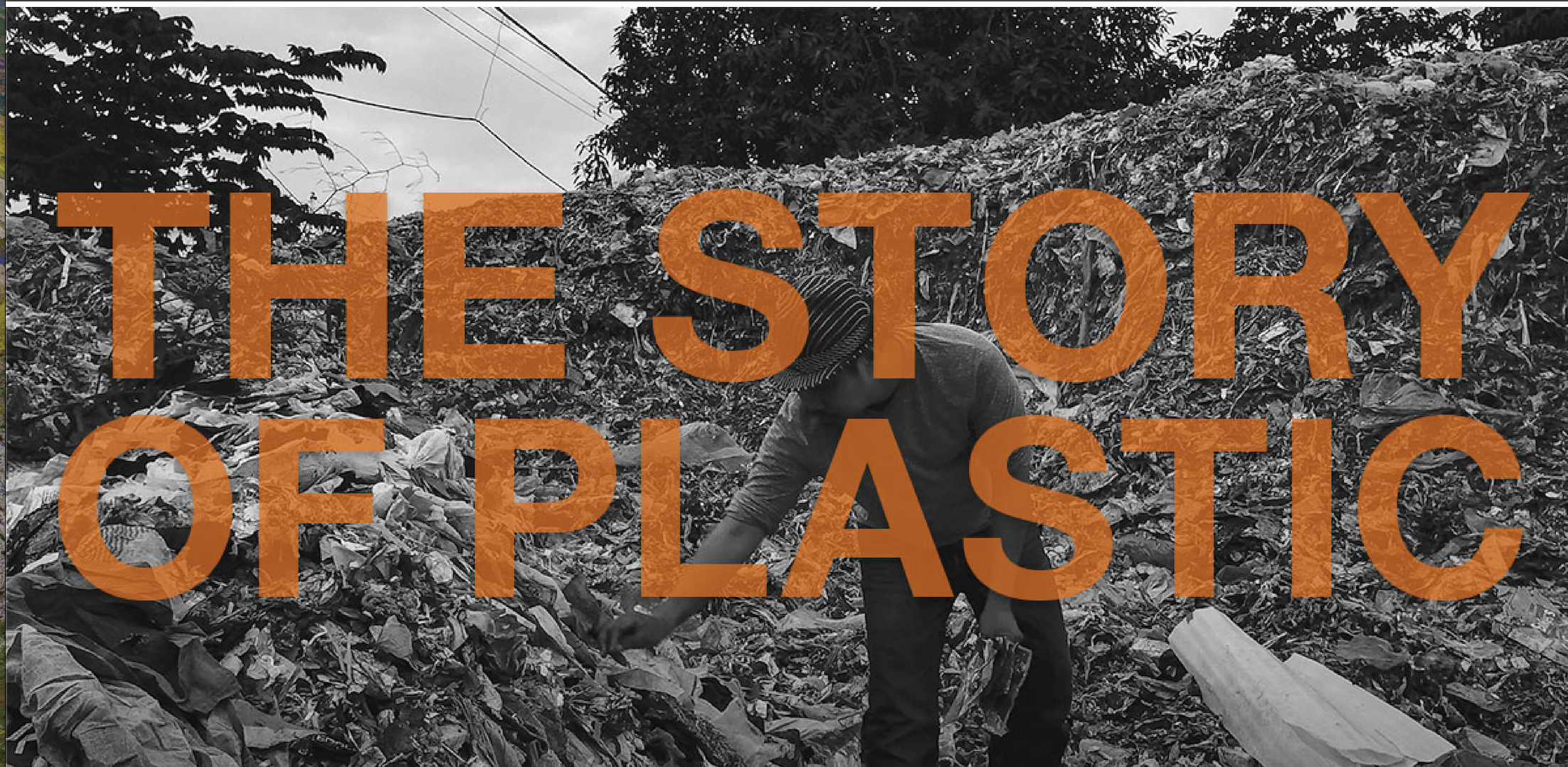
The Story of Plastic takes a sweeping look at the man-made crisis of plastic pollution and the worldwide effect it has on the health of our planet and the people who inhabit it. Shot over three continents, the film illustrates the ongoing catastrophe: fields full of garbage, mountains of trash, rivers and seas clogged with waste, and skies choked with the poisonous emissions from plastic production and processing. The film features interviews with experts and activists on the front lines of the fight, revealing the disastrous consequences of the flood of plastic smothering ecosystems and poisoning communities around the world, and the global movement that is rising up in response. With engaging original animation, archival industry footage beginning in the 1930s, and first-person accounts of the unfolding emergency, the film distills a complex problem that is increasingly affecting the planet’s and its residents’ well-being.